Search for an item, not just an aesthetic
A historical photograph can be useful evidence, a visual reference, or an illustration. Those uses require different checks. Start by writing down your purpose: showing a documented event, studying how a place looked, or finding material to reuse in a project. The Library of Congress provides digitized photographs, maps, newspapers, recordings, and other collections, but availability and rights vary across items and services.
Search with a place, person, subject, or approximate period, then narrow the results by format and collection when the site offers those filters. Try alternative spellings and contemporary terminology when a search is sparse. Older catalog language may be unfamiliar or offensive; its presence can reflect the historical record. Do not turn one search term's results into a claim that the archive has comprehensively covered a community or event.
Open the full record before downloading
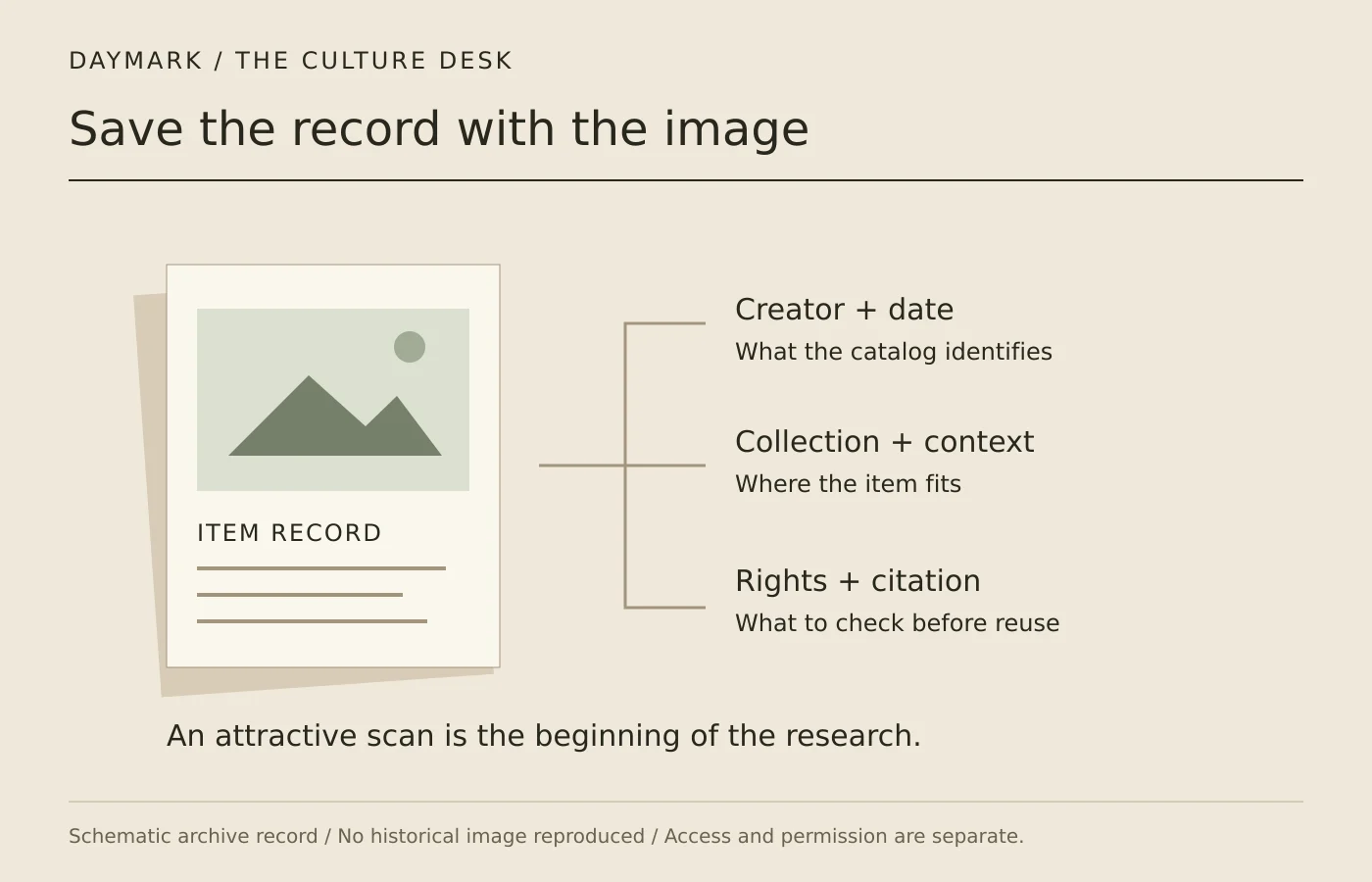
A thumbnail tells you little about provenance. Open the item page and inspect its title, creator, date, medium, notes, collection, and identifying number. A date can refer to creation, publication, or an estimated range; a title can be supplied by a cataloger rather than by the original maker. Preserve those distinctions in your notes. A precise-looking label should not be made more certain than the record supports.
Keep the item-page link alongside the downloaded file. The page holds the description and context that can disappear when an image is reposted. For a book, newspaper, or manuscript, inspect the surrounding pages as well as the single page you first found. A fragment may omit a heading, continuation, or correction that changes its meaning. The collection's introductory material can also explain how the item entered the archive.
Treat a primary source as a viewpoint
An original document is direct evidence of something, but decide what that something is. A newspaper advertisement shows what an advertiser claimed; it does not by itself prove the claim. A photograph records what was within the frame, from a particular position and moment. A diary can reveal its writer's perspective while leaving other experiences absent. Authenticity and completeness are different questions.
Separate observation from inference in your own caption. Describe what is visibly present and what the record identifies, then label any interpretation you add. Compare related items when making a broader historical argument. If a scan is difficult to read, check the image against searchable text rather than treating an imperfect transcription as authoritative. A readable digital copy can still contain missing pages, damage, or errors introduced during processing.
Access does not settle reuse rights
The Library's copyright guide distinguishes viewing material on its website from reproducing it elsewhere. Look for Rights and Access or Rights Advisory information on the item and collection. The Library generally does not own the copyright in its holdings and cannot simply grant permission for all of them. Its records can help your research, but their rights information may be incomplete or reflect information that later changes.
The Free to Use and Reuse sets offer a practical starting point for projects because staff have curated material available for reuse. Follow each selected item back to its record and retain the rights statement. A label such as no known restrictions records available knowledge; it should not be transformed into an unlimited worldwide legal guarantee. Copyright, privacy, publicity, donor conditions, and other considerations can require separate attention depending on the material and use.
Download without losing the evidence
Choose the available file appropriate to the job, keeping an original copy when you need to crop or adjust it. A large scan may preserve details that a thumbnail hides. Name your files so you can connect them to their item records, and keep a small source note containing the record link, creator, title, date, collection identifier, access date, and rights information you relied on.
If you crop, colorize, retouch, or otherwise alter an image, disclose the change where it matters to the interpretation. Do not present a reconstructed color as evidence of the original scene's colors. For historical reporting, an edit that removes a sign, person, or contextual detail can change the claim the image appears to support. Save the unedited reference so someone reviewing your work can see what changed.
Give readers a route back
The Library's citation guidance helps identify the creator, title, date, format, and source location appropriate to different material. Use those details to produce a credit that someone else can follow. A credit saying only Library of Congress may name the repository while omitting the photographer or collection. A citation and permission are separate things: naming a creator does not replace a needed license, and having permission does not remove the value of attribution.
Before publishing, read your caption beside the record one final time. Confirm the date, location, identity claims, and rights basis; mark uncertainty plainly. If the record cannot resolve an important detail, consult the collection guidance or ask a librarian rather than inventing it. The result is more than a handsome old image: it is a documented piece of evidence whose context and source remain available to your readers.
Go to the sources
- Library of Congress: Understanding copyright and website items
- Library of Congress: Free to Use and Reuse sets
- Library of Congress: Citing primary sources
- Library of Congress: Accessing digital materials
Our editorial standards explain how sources and automated briefings are handled.